LeeAnét Noble: Extending a Howard Legacy From the Shakespeare Stage to the Next Generation of Artists

By Chad Eric Smith, Director of Marketing & Communications, Chadwick A. Boseman College of Fine Arts
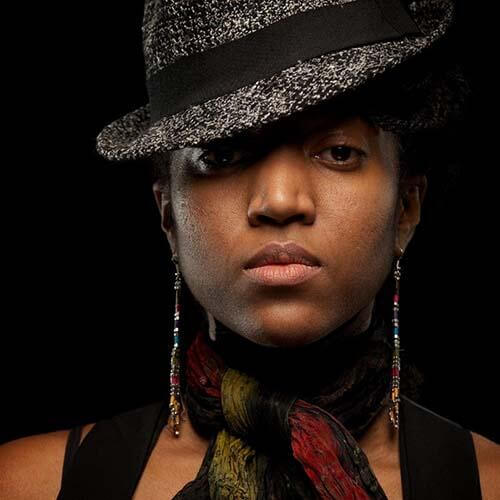
Featured Image: LeeAnét Noble headshot by BGrant Photography.
When LeeAnét Noble speaks about Howard University, her words land with the weight of lineage. A distinguished alum of the Acting program—class of 2003, who walked in 2004—she carries a multigenerational legacy that stretches across the School of Music, the Department of Theatre Arts, the School of Divinity, and decades of administrative service. “My family goes way back at Howard,” she reflects. “My mother was in the School of Music and in Theatre Arts for a while… my grandmother was in the School of Music and part of the D.C. Black Repertory… my grandfather worked at Howard for over 30 years, probably closer to 50. I have a long legacy. I even have uncles who worked on the blood bank with Dr. Charles R. Drew. And something I always saw in my family was that after they finished Howard, they gave back, stayed connected, and expressed how important that was.”
For Noble, giving back didn’t begin after success—it shaped every step of her artistic journey. From projects with Rick Owens during Paris Fashion Week, where she brought Howard students onto an international runway; to opportunities she introduced at Manhattan Theatre Club; to her current post as Director of Belonging at Shakespeare Theatre Company (STC), she has never separated her career from her commitment to the University. “Everywhere that I've worked… I'm always trying to find a way to connect back to Howard,” she says.
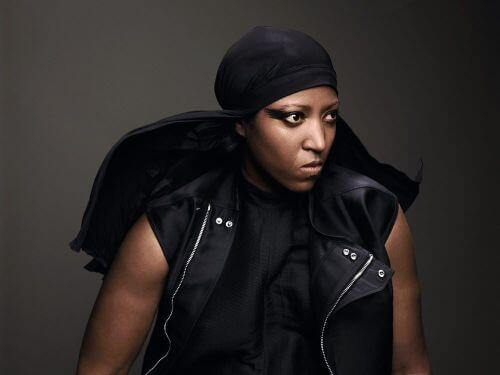
That commitment has translated into five transformative years of CABCoFA students performing, training, and building professional relationships on the Shakespeare stage. “Now we’re in the fifth year of having students from Howard on the Shakespeare stage performing and working with our teams,” she shares. Over the past several seasons, Noble has brought in artists including Edwina Finley, Keith David, Phyllis Yvonne Stickney, Hill Harper, and Harriet D. Foy to engage with students, offer critique, and witness firsthand the next generation of Black artistic talent emerging from Howard. “When I was a student there, it was such a rich experience,” she says. “I always thought, ‘What are some of the things I can help facilitate for the students in the space that I’m in?’”
Part of her vision is about honoring history while expanding possibility. When we discussed the ongoing renovation of the Fine Arts building, Noble spoke candidly about the emotional shift she felt walking through the old spaces as a student—spaces where names like Al Freeman and LaVerne Reed lived on the walls, where posters from decades past told a story before a professor ever did. She recalled moments like the dedication of Roxy Roker’s star outside Ira Aldridge Theater, intended to be the beginning of a Howard “Walk of Fame.” “I don’t know what happened after that,” she said, “but it was really lovely… it was our own Hollywood Walk of Fame.”
In response, I asked a question that sits at the heart of any institution balancing growth with identity: How do you refresh a space without losing the history that made the space special in the first place? It is a question Noble believes is worth returning to. The history, the artifacts, the lineage—they are part of the pedagogy.
Her reflections deepened when we turned to the legacy of Chadwick A. Boseman, for whom the College is now named. “There are so many beautiful levels of that name,” she said. “His artistry expanded from theatre to hip hop theatre to film… the wide breadth of potential he represented. And the fact that he gave back to the school, encouraged Dean Rashad to come in—that brought so much. When you speak a person’s name, as long as somebody is saying it, they remain. There’s power and strength and resilience in that.”
For Noble, that layered regality—the dignity, discipline, and poise embodied by Boseman and Phylicia Rashad—speaks directly to the spirit she hopes Howard continues to cultivate. She sees that as part of her role at STC as well: helping students navigate not only craft but character, not only skill but presence. “You’re always auditioning,” she tells her students. “Even after you have the job, people are watching—are you good to work with? It’s relational. It’s not always professional. You want to work with people you want to work with.”
Her artistic lens is both classically trained and culturally expansive. When the conversation ventured into the art of clowning, she drew lines from Josephine Baker—“who could get onstage, cross her eyes, do clowning, and still be regal and sophisticated”—to contemporary forms of physical comedy echoed in early work from performers like Raven-Symoné. These are insights shaped by decades of practice as a hip hop theatre artist, tap dancer, director, actor, and now published author.
That authorship is also rooted in Howard. For the past ten years, she and her mother have been working on a book that chronicles her grandfather’s stories and the significance of the HBCU experience—Howard in particular—as both a site of learning and a place of protection. Published by HarperCollins, Black, White, Colored The Hidden Story of an Insurrection, a Family, a Southern Town, and Identity in America launched recently, with FREE shipping now through December 8, 2025, on every order within the continental U.S. “Howard is such a big part of that,” she says. “It’s a place of respite… a place that should be protected.”
Noble’s presence—onstage, in rehearsal rooms, in cultural institutions, and now again in literary circles—is a testament to the breadth of her artistry. But for Howard, it is her commitment to giving back, creating access, and sustaining the lineage that makes her invaluable. The Department of Theatre Arts and the College at large have benefited enormously from the opportunities she has facilitated, and there is hope that she will soon be recognized officially as an STC partner with the department.
Her work reinforces a truth held deeply across generations of Bison:
Howard is not merely a place you attend. It is a place you continue.
And LeeAnét Noble is continuing it with brilliance, vision, and a devotion shaped by family, artistry, and legacy.